Ilm-fan
On one Earth-like planet, a year lasts less than a week
In the world of science and technology, space exploration continues rapidly. Astronomers have managed to discover more than 6,000 planets, known as exoplanets, outside the Solar System. Among them are giant gas worlds, hot planets located very close to their stars, and celestial bodies that resemble Earth in certain aspects. Planets located within the habitable zone of their star arouse particular interest. This term refers to the range of distances where liquid water could exist on a planet's surface if an atmosphere and other necessary conditions are present. However, simply being in such a zone does not mean the planet has oceans or life.
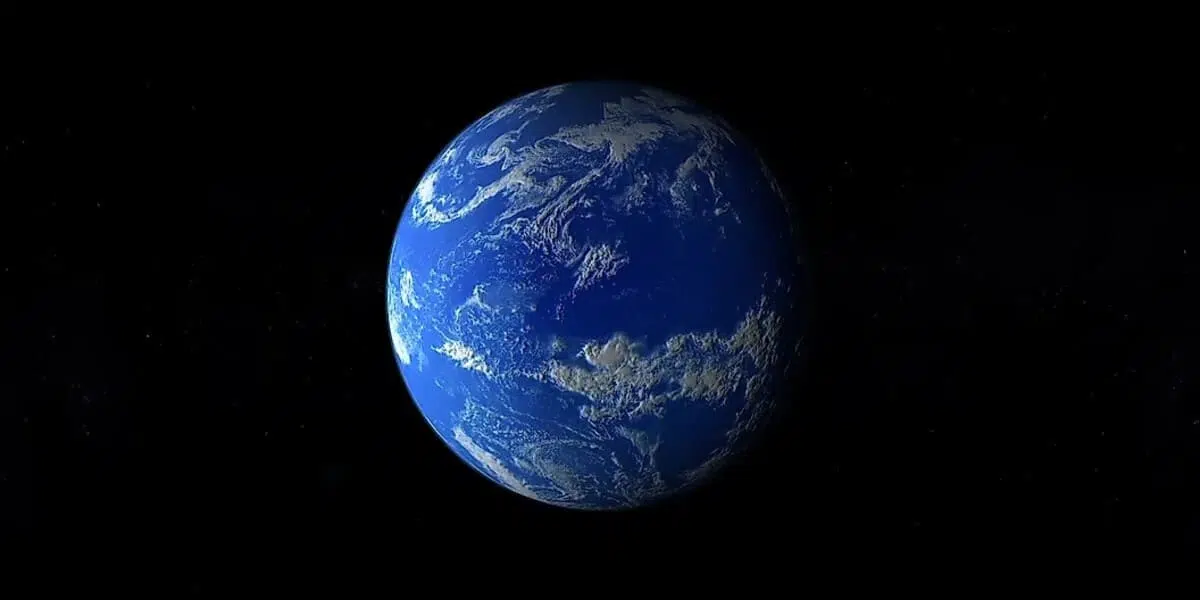
One of the interesting worlds that caught scientists attention is the exoplanet TOI-700 d. Discovered in 2020, it orbits a red dwarf star that is smaller and cooler than the Sun. One year on this planet equals 37.4 Earth days. According to updated estimates in the NASA archive, the planet's diameter is about 14.5 percent larger than Earth's. A notable feature of TOI-700 d is its location in the habitable zone of a relatively calm star that does not show extreme activity. This is an important factor when studying planets around red dwarfs.
Radiation from such stars can significantly affect a planet's atmosphere. Therefore, scientists consider not only temperatures suitable for liquid water, but also atmospheric preservation and stellar activity. If TOI-700 d has oceans and a sufficient atmosphere, a relatively stable environment could exist there. However, the exact appearance of its surface remains unknown. This world is located more than 100 light-years away from us, meaning even light takes more than a century to reach it.
Another interesting celestial body studied by researchers is TRAPPIST-1e, discovered in 2017. Its diameter is about 92 percent of Earth's, and its mass is roughly 69 percent. One of the most fascinating characteristics of this rocky planet is that it completes an orbit around its star in just 6.1 Earth days. Consequently, a year there lasts less than a week. The planet is located very close to its star, with the distance between them being only 2.9 percent of the distance between Earth and the Sun.
Nevertheless, because the TRAPPIST-1 star is much cooler and dimmer than the Sun, such proximity does not automatically make the planet uninhabitable. The planets in this system likely always face their star with the same side, a phenomenon known as tidal locking. If this is the case, one half of TRAPPIST-1e is in permanent daylight while the other is in permanent night. However, the presence of life on any of these worlds has not yet been confirmed.
Ulashish